
How to Get Rid of Nutsedge in a Florida Lawn and Keep It
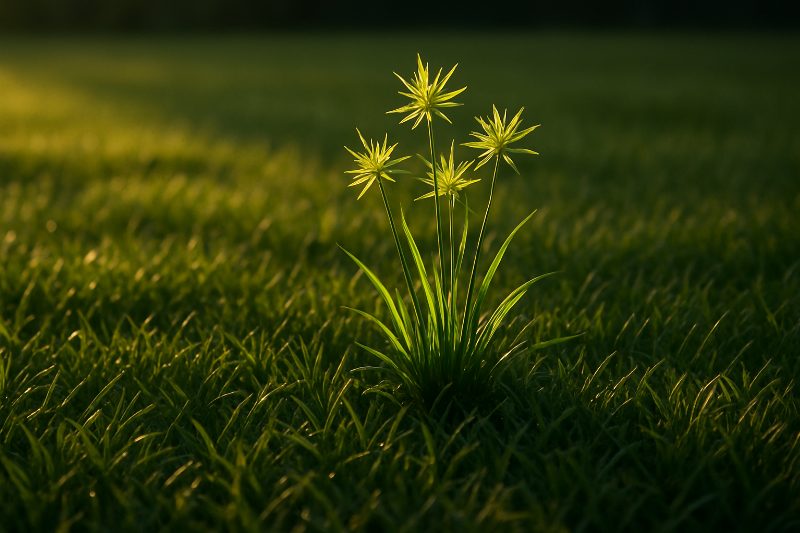
Nutsedge doesn't care how well you mow, how often you fertilize, or how much pride you take in your lawn. It will show up anyway, grow faster than your grass, and laugh at every attempt to pull it out by hand. If you've got those tall, lime-green spikes poking above your St. Augustine or Bermuda turf in Bradenton, Parrish, or anywhere else in Manatee County, you already know the frustration. The good news is that nutsedge can be controlled. The key is understanding what you're actually dealing with before you reach for a product or a shovel.
Nutsedge Is Not a Grass and Not a Broadleaf Weed
This distinction matters more than it sounds. Most standard weed killers are formulated for either grassy weeds or broadleaf weeds. Nutsedge is neither. It belongs to the sedge family, and its biology is different enough that the wrong herbicide will do nothing at all while your nutsedge keeps right on spreading.
Here's how to identify it with confidence:
- Stem shape: Grab a stem and roll it between your fingers. If it's triangular (three-sided), it's a sedge. Grasses have round or flat stems.
- Leaf arrangement: Nutsedge leaves grow in sets of three from a central point at the base. Grasses grow in sets of two.
- Color: Yellow nutsedge is a pale, almost yellow-green. Purple nutsedge is a slightly darker green. Both will stand noticeably taller than your lawn grass within just a few days after mowing.
- Seed heads: In summer, nutsedge sends up a flower/seed head at the top. Yellow nutsedge has a yellow-brown head; purple nutsedge has a reddish-purple one.
In Florida's heat and humidity, both species thrive. Yellow nutsedge tends to dominate in wet, poorly draining areas, while purple nutsedge is a bit more tolerant of drier conditions. Most yards in Manatee County end up with one or both.
Why Pulling Nutsedge by Hand Makes It Worse
This is the mistake nearly every homeowner makes at least once. You see a clump of nutsedge, you grab it, you pull. It comes up easily. You feel good. Two weeks later there are three clumps where one used to be.
Here's what actually happened underground. Nutsedge reproduces primarily through underground structures called nutlets (also called tubers or nuts) that form along rhizomes beneath the soil surface. A single plant can produce dozens of nutlets in a single season. When you pull the top growth, you leave those nutlets in the ground. Worse, the physical disturbance triggers dormant nutlets nearby to sprout. Pulling nutsedge is, quite literally, planting more nutsedge.
The nutlets can remain viable in the soil for years, waiting for the right conditions. This is why nutsedge control is a multi-step, multi-season process. Anyone who promises a one-and-done solution is oversimplifying a problem that Florida soil takes seriously.
The Right Herbicides for Florida Nutsedge
Because nutsedge is a sedge and not a grass or broadleaf weed, you need a sedge-specific herbicide. The two most common active ingredients you'll find in effective products are halosulfuron and sulfentrazone.
Halosulfuron (found in products like Sedgehammer) is a post-emergent herbicide that works by being absorbed through the leaves and moving down into the plant's root system. It's effective on both yellow and purple nutsedge, and it's labeled for use on St. Augustine grass, which is critical since many herbicides that kill nutsedge will also damage or kill St. Augustine turf.
Sulfentrazone (found in products like Dismiss) works more quickly, often showing visible results within a few days. It disrupts the plant's ability to process light, causing the leaves to burn and die. It's also labeled safe for St. Augustine and Bermuda grass when used at the correct rate.
A few things to keep in mind when applying either product:
- Apply to actively growing nutsedge. Dormant or stressed plants absorb less herbicide and results will be poor.
- Do not mow for several days before or after application. You need as much leaf surface as possible for absorption.
- Add a surfactant. The waxy surface of nutsedge leaves repels water-based sprays. A small amount of non-ionic surfactant in your tank mix dramatically improves absorption.
- Repeat applications are almost always necessary. Nutlets that weren't reached by the first treatment will sprout and need a follow-up treatment, typically four to six weeks later.
- Read and follow label directions exactly. Rates matter. Applying too much in an attempt to speed things up can damage your turf and won't kill the nutlets any faster.
Timing Your Treatments in the Florida Climate
Florida's warm, humid growing season is essentially year-round, but nutsedge is most aggressively active from late spring through early fall. In Bradenton, Lakewood Ranch, and Parrish, that window runs roughly from April through October. This is also when the herbicides work best because the plant is actively growing and transporting materials down to its root system, which is where you need the chemical to go.
Treating in winter isn't useless, but results will be slower and less complete. If you discover a major nutsedge problem in November or December, start now and plan for a more aggressive treatment program when warm weather returns in spring.
Irrigation also plays a role in timing. Do not irrigate for at least 24 hours after application if using halosulfuron. Washing the product off the leaves before it's absorbed negates the treatment. If rain is in the forecast (and in Manatee County, it often is), wait for a dry window of at least a day or two.
Fixing the Conditions That Invited Nutsedge In
Herbicides will knock nutsedge back, but if the underlying conditions that allowed it to thrive aren't addressed, it will keep returning. Nutsedge has a few key weaknesses you can exploit:
Poor drainage is nutsedge's best friend. Yellow nutsedge in particular loves saturated soil. If you have a low spot in your yard where water pools after rain or irrigation, nutsedge will colonize it faster than almost anything else. Improving drainage through grading, installing a French drain, or simply adjusting your irrigation zones to reduce overwatering can dramatically reduce nutsedge pressure over time.
Overwatering is one of the most common causes of nutsedge problems in Florida yards. Many Bradenton and Lakewood Ranch homeowners run their irrigation systems on autopilot year-round without accounting for seasonal rainfall. During the rainy season (June through September), you may need little to no supplemental irrigation. Running your system anyway creates the persistently wet soil that nutsedge loves.
Thin or stressed turf lets nutsedge get established. A dense, healthy lawn is its own best defense. Nutsedge establishes much more easily in bare patches, compacted areas, or turf that's stressed from drought, disease, or insect damage. If you've been dealing with issues like chinch bugs or drought stress in your St. Augustine grass, or if Take-All Root Rot has left bare patches in your lawn, those open areas are exactly where nutsedge will move in next.
Shade doesn't stop it. Unlike many weeds that need full sun, nutsedge tolerates partial shade. Don't assume a shaded corner of your yard is protected.
What About Organic or Natural Options?
Honestly, there are no truly effective organic methods for nutsedge control once it's established. Corn gluten meal, vinegar sprays, and manual removal all fail to address the nutlets and do little more than slow surface growth temporarily.
If you prefer a reduced-chemical approach, the most effective strategy is a combination of selective herbicide use in the worst areas and aggressive agronomic management (drainage improvement, correct irrigation, fertilization to thicken turf) in the rest of the yard. You can often reduce the number of chemical applications needed by simply giving your grass what it needs to outcompete the problem.
Other Pests and Problems That Mimic or Accompany Nutsedge
Nutsedge rarely shows up alone. The same wet, stressed-turf conditions that favor nutsedge also attract other problems. While you're doing a thorough assessment of your lawn, it's worth checking for:
- Mole crickets, whose tunneling disrupts roots and creates the thin, patchy turf that nutsedge exploits. Learn how to spot mole cricket damage before it ruins your turf.
- Gray leaf spot, a fungal disease that spreads in Florida's hot, humid summers and can leave turf thin and vulnerable. Gray leaf spot is especially common in St. Augustine grass during summer months.
- Fire ants, which are a constant nuisance across Manatee County and can make lawn maintenance uncomfortable. Effective fire ant control is possible without harming your grass.
Managing Nutsedge on Anna Maria Island and Coastal Properties
If your lawn is near the coast, on Anna Maria Island, or in Ellenton's lower-lying areas, nutsedge pressure tends to be even higher. Salt air and sandy, fast-draining soils can seem like they'd work against nutsedge, but the proximity to water tables and the tendency for low coastal lots to receive tidal flooding or storm drainage makes conditions surprisingly favorable. Purple nutsedge in particular does well in these environments.
For coastal homeowners, a slightly different approach makes sense. Because salt and wind stress already challenge your turf, be especially careful with herbicide rates. Apply conservatively and give your grass extra recovery time between treatments. Maintaining strong turf through proper fertilization and irrigation management is even more critical here than it is inland.
Our team works with lawn care and landscaping customers on Anna Maria Island regularly and understands the unique challenges coastal properties present. The same thoughtful approach applies whether you're dealing with nutsedge in a Parrish subdivision or a beachside cottage lawn.
A Realistic Timeline for Getting Rid of Nutsedge
Set reasonable expectations. Nutsedge with an established nutlet bank in your soil is not a one-spray problem. Here's what a realistic control timeline looks like:
- Year 1, spring/summer: Two to three herbicide applications, four to six weeks apart. Visible improvement, but some regrowth is normal.
- Year 1, fall: Assess remaining pressure and address drainage or irrigation issues over the off-season.
- Year 2, spring/summer: Follow-up applications targeting any re-emergence. Nutlet viability decreases significantly in year two.
- Year 2 and beyond: With good agronomic management and prompt spot-treatment of any new flare-ups, nutsedge becomes a manageable nuisance rather than a lawn-dominating problem.
This process takes patience, but it works. The homeowners who get frustrated and stop after one application are the ones who call us the following summer saying it's worse than ever.
When to Call a Professional
If your nutsedge covers more than about 20 to 30 percent of your lawn, or if you've done two or more rounds of treatment without noticeable improvement, it's worth having a professional take a look. There may be a drainage issue that needs to be corrected first, the herbicide program may need adjustment, or there may be something else going on with your turf that's making it unusually vulnerable.
Our team serves homeowners across Bradenton, Lakewood Ranch, Palmetto, Parrish, and Ellenton with honest, practical lawn care advice and treatment programs that actually address the root cause. You can browse all of our lawn care and landscaping services or reach out to us directly with photos and questions. We'd rather give you a straight answer than sell you a treatment you don't need.
Nutsedge is a tough opponent, but it's not unbeatable. With the right products, correct timing, and a few changes to how you manage water and turf health, you can take your lawn back.